 Mindfactor.
Finding Warmth in the Minimalist Lifestyle
Minimalism does not mean cold, empty spaces. It is about creating room for what truly matters, wrapped in warmth.
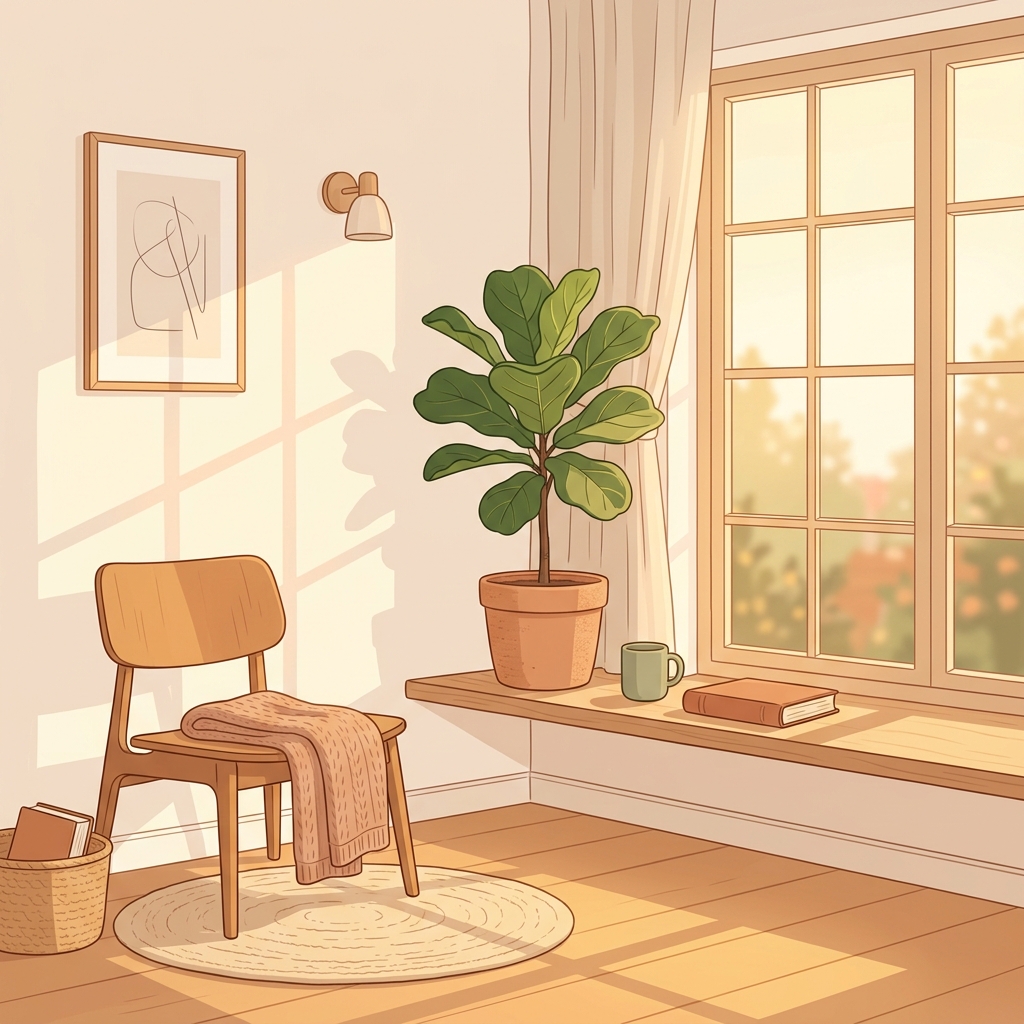
There is a version of minimalism that feels punishing. White walls. Bare floors. Objects arranged with the precision of a gallery, and the warmth of one.
That is not the minimalism worth living.
The minimalism worth living is softer. It is a bookshelf with just the books you actually return to. A kitchen counter clear enough that you can see the one ceramic mug you genuinely love. A room that feels easy to breathe in — not because it is empty, but because nothing in it asks for your attention unnecessarily.
Warmth Is a Choice, Not a Quantity
The common fear is that fewer things will feel colder. In practice, the opposite tends to be true.
Clutter creates visual noise, and visual noise is surprisingly exhausting. When you remove the things you do not care about, the things you do care about become visible again. A candle. A photograph. A throw blanket in a colour that makes the room feel like late afternoon.
Warmth is not about accumulation. It is about intention.
Starting With What You Already Have
You do not need to buy anything to begin. Most minimalist transitions start with subtraction, not addition.
Pick one surface — a counter, a desk, a shelf — and clear everything off it. Then return only the objects that earn their place. Something useful, something beautiful, or something that carries meaning. If an object is none of those things, it is probably just occupying space.
This is not about throwing everything away. It is about deciding what deserves to stay.
The Cozy Minimalist Home
Warmth in a minimal space usually comes from texture and light, not quantity. A linen cushion, a wooden bowl, a plant that is alive and growing — these things do not clutter a room, they soften it.
Natural materials age well and feel honest. Good lighting, especially warm bulbs in the evening, changes the entire feeling of a space. Candlelight, if you like it, costs almost nothing and adds more atmosphere than most objects ever could.
An Ongoing Practice
Minimalism is not a destination you arrive at and then leave alone. It is an ongoing practice of noticing what is accumulating, and asking whether it belongs.
Some days you bring something home and it fits perfectly. Other days you realise something has been sitting in a corner for eight months and you have never once thought about it fondly.
The edit never quite ends. But neither does the feeling of a room you walk into and immediately feel at ease.
That is what you are building. Not emptiness. Ease.
How did this post feel?
Comments
0 totalNo comments yet. Be the first to share a thought.
Thanks for reading.
If this resonated with you, share it with someone who might appreciate it — or keep exploring.