 Mindfactor.
How Taking a Shower Can Ease Anxiety
Sometimes relief is not a grand insight—it is hot water, soap, and permission to leave the day on the other side of the curtain.
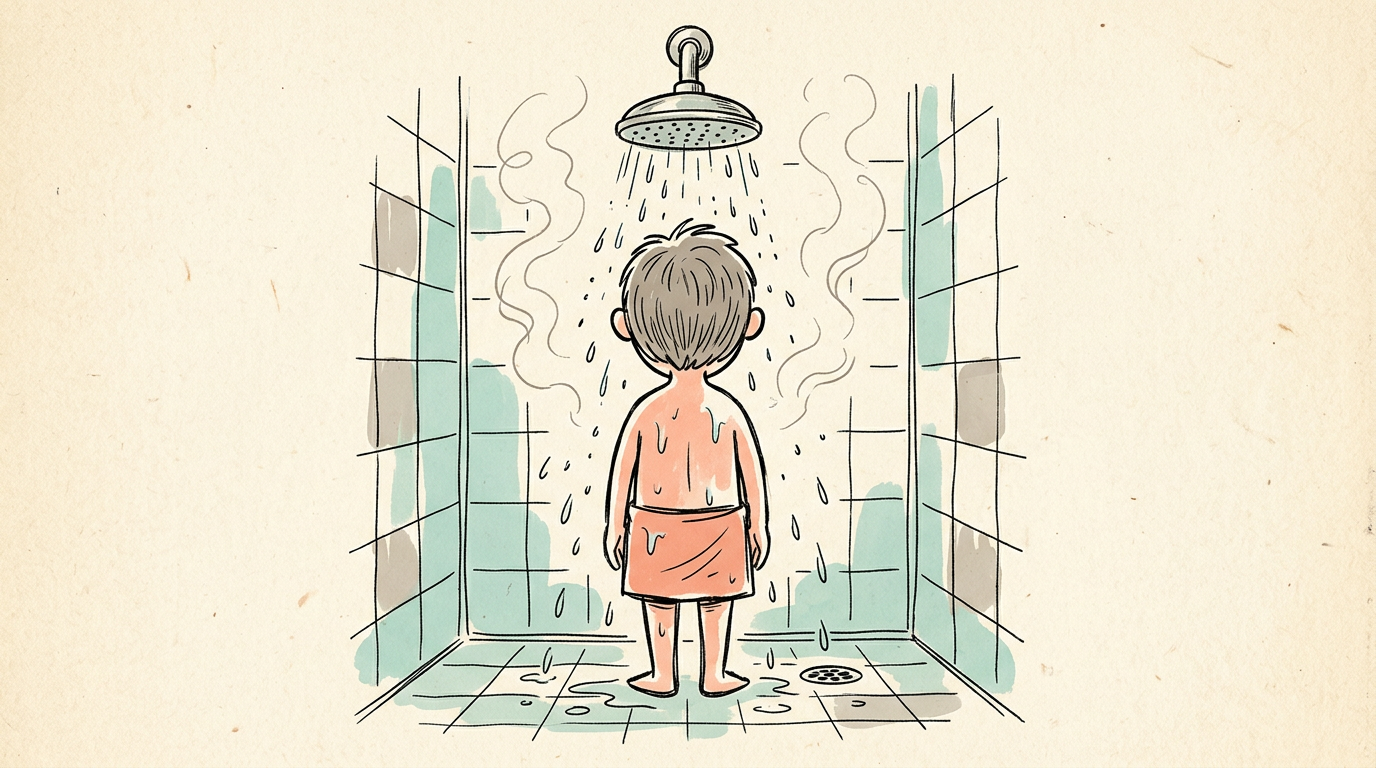
You turn the handle. The first hiss of water hits the tub and your shoulders do something they forgot they were allowed to do—they drop, just a little.
It is such a small ritual. And yet on the days when your mind will not stop replaying, when your chest feels tight for no reason you can neatly explain, the shower is often where you go without a spreadsheet or a pep talk. You go because your body already knows: something here helps.
What the research actually notices
Science will never replace the private comfort of steam on your skin, but it can echo what many of us have felt—that cleaning ourselves after stress is not only about hygiene.
In work published in Social Psychological and Personality Science, researchers looked at how actual and simulated cleansing (yes, even watching someone else wash their hands) could soften the aftermath of stressful experiences across large samples from the U.K., the U.S., and Canada. The headline is simple: cleansing behaviors were associated with lower anxiety after people encountered something intense.
Other findings from the same line of research suggest cleansing may relate to more adaptive cardiovascular reactivity during stress—roughly, your heart and blood pressure may not stay as “stuck on high alert” in quite the same way. That is not a promise of perfection; bodies vary. It is a clue that the shower is doing more than rinsing shampoo.
If you want a readable overview of how journalists have unpacked some of this—including heat, hormones, and the psychology of “washing the day off”—The Swaddle walks through it in plain language.
Separately, studies on bathing and immersion sometimes find strong relaxation effects from warm full-body immersion compared with showering alone—useful context if you ever have access to a bath and find it soothing. Your mileage may vary; the point is: water is not monolithic. Different forms land differently.
“Wiping the slate” is not magic—it is metaphor with a body behind it
Spike Lee (the psychologist at the University of Toronto, not the filmmaker) put the mechanism into words that feel almost embarrassingly accurate. He described how washing removes residues from the body—and how that physical act can mirror a psychological separation between a stressful past moment and the present.
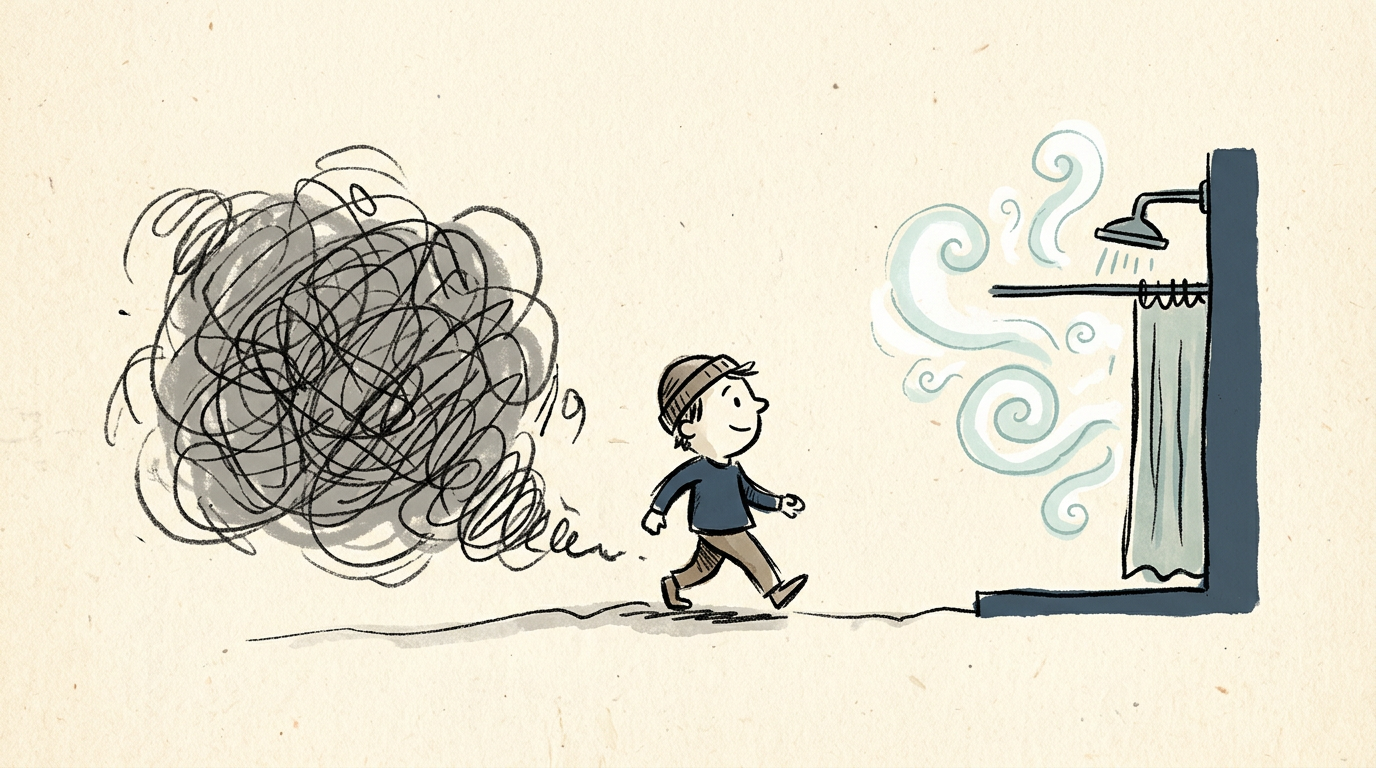
When the water runs, you are not pretending the hard thing did not happen. You are giving your nervous system a scene change.
That is why the shower can feel less like “self-care branding” and more like a boundary. The argument stops. The email thread pauses. The room with the harsh lighting is on the other side of the door.
Hot, cold, and everything in between
People love to debate hot versus cold as if there is a single winner. In real life, it is more like choosing music: what fits this body, this season, this kind of wired.
- Warm showers are often described as comforting because heat can invite ease in the muscles, soften the grip in your jaw, and help you exhale a little longer. Popular-science writing sometimes links warmth to feel-good chemistry; treat that as gentle context, not a lab report in your bathroom.
- Cool or cold water gets talked about for alertness and contrast—how shocking cold can wake you up, narrow your attention to sensation, and sometimes interrupt a spinning thought loop. It is not for everyone, and it does not need to be extreme to “count.”
If you are curious about hydrotherapy’s long history—humans have been applying water to the body for comfort for a very long time—think of it less as a trend and more as an old, human idea you are allowed to borrow.
A small visualization you can try (or skip)
If you like, stand—or sit safely—and let the water land where it is already landing.
Picture stress as something with a texture: sticky, dusty, or too bright. You do not have to name the whole story. Just notice one place in your body where it collects—shoulders, throat, hands.
Now imagine the water as a line moving down you, not erasing your life, but carrying residue downward, away from your face, away from the place where you have to be clever or brave. When you soap your hands, feel the slip and friction. Rinse until the slip changes. If your mind interrupts, that is not failure; it is a mind. Return to the temperature on your skin.
You are allowed to let the day be a little less glued to you than it was five minutes ago.When showering is not simple (and smaller resets)
It would be tidy to pretend showers are easy for everyone. They are not.
- Sensory pain can make water feel overwhelming.
- Depression and executive dysfunction can make the whole task feel impossibly heavy.
- Water insecurity and access issues mean “just take a shower” is never a universal prescription.
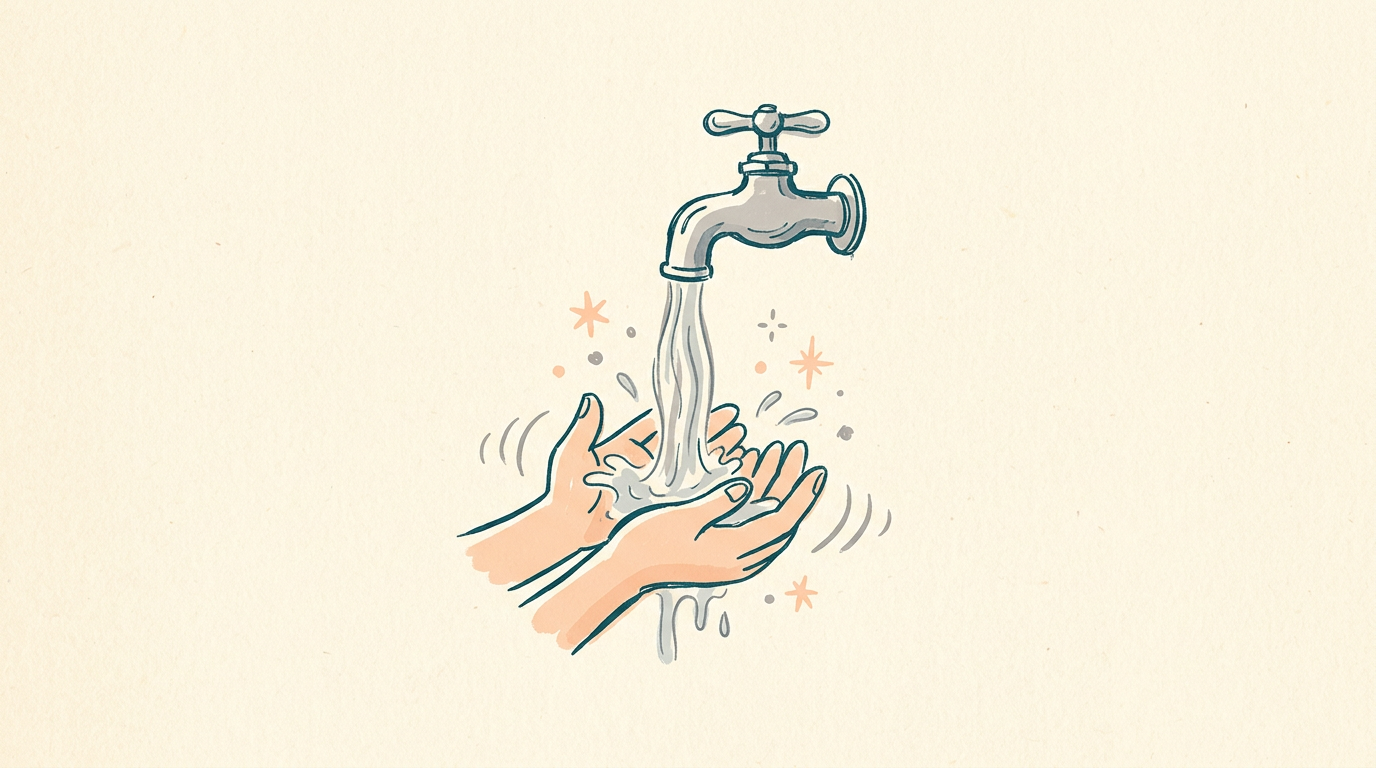
If a full shower is not available—or not okay today—studies in the same cleansing tradition suggest even smaller acts can still nudge anxiety downward for some people: washing hands, splashing cool water on your face, or, in controlled settings, using hand sanitizer when that is what you have. Not because you are “dirty,” but because your skin and attention are participating in a beginning again.
Before you go
I have stood under water with my forehead against cool tile, not because I am wise, but because I am human and sometimes my thoughts are loud. The shower does not fix everything. It offers something rarer than a cure: a pause that your body understands.
Take the pause when you can. Let the rest wait on the dry side of the curtain.
How did this post feel?
Comments
0 totalNo comments yet. Be the first to share a thought.
Thanks for reading.
If this resonated with you, share it with someone who might appreciate it — or keep exploring.