 Mindfactor.
The Benefits of Slow Mornings
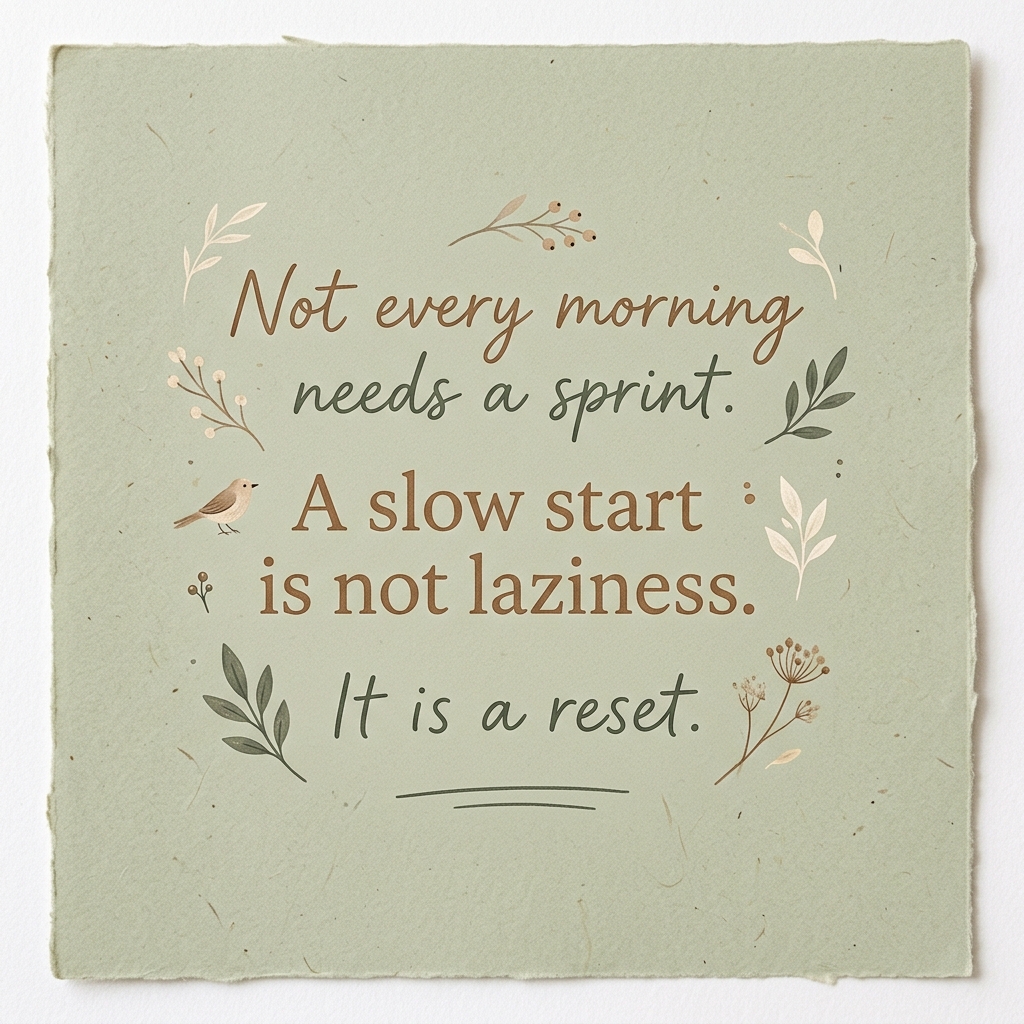
Not every morning needs a sprint. A slower start can calm your mind, lower frustration, and help you arrive in your day with steadier energy.

The alarm went off, and for once I did not jump.
The curtain was still half closed. Light was leaking in through one line near the window frame. My phone buzzed on the side table, and I just watched it for a second with my hand still under the blanket.
Usually, that moment is the starting pistol. Get up. Move fast. Check everything. Fix everything. But some mornings carry a different kind of truth: your mind is tired, your body feels heavy, and rushing only adds more noise.
Not Every Morning Should Be a Rush
For many of us, morning pressure starts before the day even begins. You wake up and already feel behind. Even before breakfast, your chest is tight and your thoughts are running.
I notice this in myself too. When I force speed on a day that needs softness, I become more irritable, less focused, and strangely more exhausted by noon.
A slow morning is not laziness. It is a reset.
Sometimes it is okay to stay in bed for a little longer if that pause helps your mind settle. Sometimes it is even okay to reach the office an hour late if that extra time genuinely helps you heal, ease frustration, and show up with better energy for the day.
A slow morning is not about avoiding life. It is about entering life with your nervous system on your side.
Why Slow Mornings Help
When you wake in a rush, your body can stay in threat mode: shallow breaths, fast thoughts, urgent decisions. Your system reads the day as danger before anything has happened.
A slower start gives your brain a different signal: we are safe enough to begin with steadiness. That small shift can improve how you regulate emotion, how you speak to people, and how long your focus lasts.
You are not "winning the morning" by panicking early. You are only borrowing stress from hours that have not arrived yet.

A 90-Second Reset You Can Try
If you like, imagine this:
Your room is still quiet. The air feels slightly cool on your face. Your blanket has a little weight on your legs. One hand rests on your chest, the other on your stomach. You take a slow breath in through your nose and feel your ribs widen like a small umbrella opening. You exhale longer than you inhale, as if fogging a mirror very gently. In the distance, maybe a fan hums, or a bird calls once. Nothing dramatic happens. You simply return to your own body, one breath at a time.

That is enough to start.
Use It, Don't Misuse It
A slow morning helps when it is intentional. It becomes unhelpful when it turns into avoidance every day.
Try this simple boundary:
- Use slow mornings on days when your stress is clearly high or your emotional battery is low.
- Communicate responsibly if you will be late.
- Keep one anchor for the day (for example, a start time, one priority task, or one commitment you do not skip).
- Check in honestly: Did this help me re-center, or did I drift?
The point is not to escape your responsibilities. The point is to meet them in a healthier state.

What Changes Over Time
When you protect even a few unhurried mornings each week, something subtle begins to change.
You stop feeling like the day is chasing you.
You react less from frustration.
You carry more patience into ordinary moments.
Not perfect. Not every day. Just a little more grounded than before.
If tomorrow morning feels heavy, you are allowed to begin softly. You are allowed to choose steadiness over speed. And then, when you are ready, you can move.
How did this post feel?
Comments
0 totalNo comments yet. Be the first to share a thought.
Thanks for reading.
If this resonated with you, share it with someone who might appreciate it — or keep exploring.